
DIY home energy audit checklist
A do-it-yourself audit is a room-by-room walk-through for drafts and loads. It finds obvious problems, not hidden ones. Use the list, tick items off and decide whether a professional assessment is worth asking about.
On this page
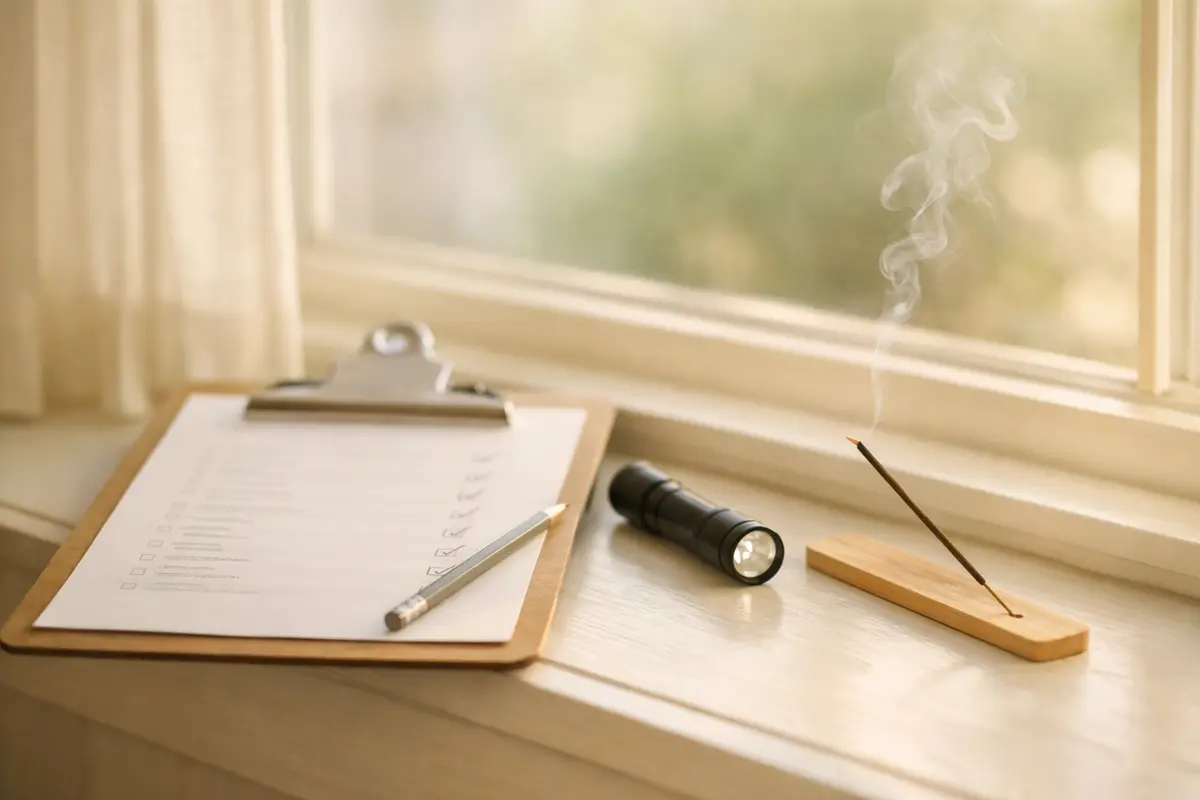
An energy audit answers one question: where is this home losing energy? A professional assessor uses equipment to measure it. You can get a rough first answer with a flashlight, a stick of incense and an hour. This checklist follows the Department of Energy's consumer guide to home energy assessments.
DIY home energy audit checklist
A do-it-yourself audit is a walk-through that finds the obvious leaks and loads. It does not replace a professional assessment, which measures air leakage with equipment.
0 of 17 done
Prepare
Walk-through for air leaks
Look at joints where different materials meet, and at anything that passes through a wall.
DOE says the largest leaks are often there, not at windows and doors.
Source: U.S. Department of Energy, FEMP Home Energy Checklist
Smoke test
Best on a cool, windy day. Pass a lit incense stick near each spot: smoke pulled in or blown out marks a leak.
Look at the loads
Decide what's next
Sources (3)
What a DIY audit can and cannot find
DOE describes the do-it-yourself version as a walk-through that concentrates on the common places air leaks. Those are the joints where different materials meet, such as where the foundation meets the wall and where a chimney meets siding, and the places things pass through a wall: outlets, switch plates, door and window frames, baseboards, attic hatches, wall or window air conditioners, vents and fans, and cable and phone lines. It also means looking at whether caulk and weatherstripping are in good shape.
The department's home energy checklist adds that the biggest leaks are often at plumbing penetrations, around chimneys and recessed lights, and behind cabinets, not just at windows and doors. A blower-door test is the way a professional finds those.
The smoke test
On a cool, windy day, close the exterior doors, windows and fireplace flues, turn on exhaust fans that blow outside, then pass a lit incense stick around the places above. Smoke pulled into the house, or blown away from the stick, marks a leak. DOE also describes a flashlight test at night with a partner outside, and a paper test, in which a sheet of paper closed in a door or window that slides out without tearing marks a leak. Keep the flame away from curtains and anything flammable.
The guide lists turning off combustion appliances, such as a gas furnace and water heater, as part of the test and says that step can be skipped. Skip it. The checklist carries that note as a flagged item.
When to ask a professional
DOE says a professional assessment is a more detailed evaluation that measures airflow in and out of the house, using a blower door, a duct test and infrared imaging. You can find an assessor through your electric or gas utility, your state or local energy or weatherization office, or the ENERGY STAR resources. Before the visit, list the problems you have noticed and gather recent bills.
Worked example
Alicia starts by pulling out the last year of bills and listing what bothers her: a cold bedroom and a draft by the back door. On a windy afternoon she runs the smoke test. Smoke leans into the room at the outlet on the cold bedroom's exterior wall, bends at the back door's threshold and wobbles at the attic hatch. She ticks those off and adds the plumbing penetration under the kitchen sink, which she would not have thought to check. She then moves to the loads section: the water heater setting, the thermostat schedule and the filters. At the end she ranks the fixes. The small gaps she will seal this weekend using the air sealing checklist, and the attic is a candidate for a professional assessment.
Renting
All of the checking is allowed. Sealing is usually small caulk and weatherstripping work, but check your lease, and ask the landlord for anything bigger with the repair request letter.