
Furnace maintenance checklist
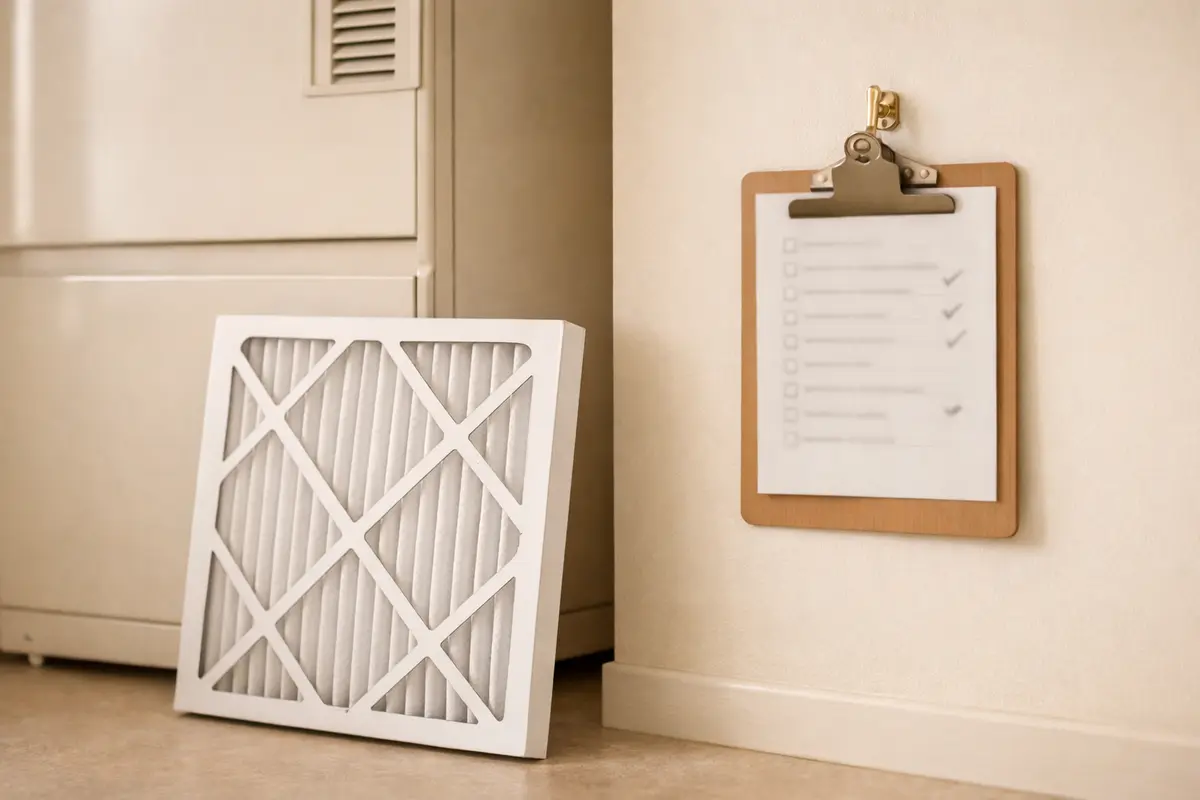
Replace the filter on schedule, hire a technician for yearly service, keep vents and chimneys checked, and keep working carbon monoxide alarms on every level. This list never involves opening a gas line.
On this page
Furnace maintenance is partly about the bill and partly about safety. The Department of Energy says regular maintenance can cut heating and cooling costs by 10% or more and extend the life of the equipment. The CDC treats yearly service by a qualified technician as a carbon monoxide safeguard. The checklist splits the work between what you do and what you pay a professional for.
Furnace maintenance checklist
A short, safety-first list. It covers what a homeowner does and what a qualified technician does. It is not a repair guide, and it never involves opening a gas line.
0 of 18 done
You do
A qualified technician does
CDC lists yearly service of gas and oil heating systems as a carbon monoxide safeguard.
Source: Centers for Disease Control and Prevention, About carbon monoxide
What the yearly visit should cover
Ask the technician to confirm each of these on the service ticket. They are the technician's jobs, not yours.
ENERGY STAR says faulty connections are a fire hazard and a dirty burner or cracked heat exchanger makes the furnace run less safely.
Source: ENERGY STAR, Maintenance Checklist (heating and cooling)
Carbon monoxide alarms
When it's time to replace
Sources (6)
- Centers for Disease Control and Prevention, About carbon monoxide cdc.gov
- U.S. Consumer Product Safety Commission, Carbon Monoxide Information Center cpsc.gov
- U.S. Department of Energy, Consumer Guide to Home Heating and Cooling energy.gov
- Carrier, Furnace not turning on (help page) carrier.com
- ENERGY STAR, Maintenance Checklist (heating and cooling) energystar.gov
- U.S. Department of Energy, Energy Saver: Furnaces and Boilers (archived May 31, 2026) web.archive.org
What you do
Check the air filter monthly during the heating season, and replace it if it is dirty. DOE gives that monthly interval for peak seasons. Carrier's help page says to replace the filter as needed for its type and your home, and to turn off the furnace's electrical supply before you slide it out. Keep vents and registers clear of furniture, and read the owner's manual, which has the upkeep that is specific to your model.
What a technician does
DOE says to have a technician check a furnace in the fall. The CDC asks for yearly servicing of the heating system, the water heater and any other gas, oil or coal appliance by a qualified technician, correct installation of gas appliance vents, and a yearly check or cleaning of any chimney, since debris can let carbon monoxide build up. The checklist asks you to book these, not to attempt them. No item involves opening a gas line, relighting a pilot or touching wiring.
Annual furnace maintenance: what the visit should include
A yearly furnace tune-up is easy to book and hard to judge, because you rarely see what the technician did. ENERGY STAR recommends a contractor check-up every year before the season, the heating system in the fall and the cooling system in the spring, and suggests tying both to the clock changes so you remember. The checklist's "What the yearly visit should cover" section lists what ENERGY STAR and the Department of Energy say a check-up includes, so you can ask for each item on the service ticket.
For the heating side, ENERGY STAR lists the gas or oil connections, gas pressure, burner combustion and the heat exchanger, and warns that a dirty burner or cracked heat exchanger makes a furnace run less safely and efficiently. DOE's furnace page adds the forced-air checks a professional should make: inspect the combustion chamber for cracks, test for carbon monoxide, set the blower and the temperature of the air it delivers, clean and lubricate the blower, clear away soot, dirt and corrosion, check the flame and the fuel input, and seal where the furnace meets the main ducts. Both lists include the general items too: tightening electrical connections, checking the controls and the start-up cycle, and checking the condensate drain on a furnace that has one. ENERGY STAR says airflow problems alone can reduce a system's efficiency by up to 15 percent.
Gas, propane and oil furnaces
The yearly visit is the same idea for each fuel. DOE groups natural gas and propane together, and ENERGY STAR's list covers gas or oil connections and combustion for both. The fuel-specific parts are the burner and its adjustment, which the technician sets for your fuel. Clearing soot is on DOE's list, so on an oil furnace ask what the technician found and cleaned. Whatever the fuel, DOE stresses the venting: the vent pipe and chimney carry combustion gases outdoors, deteriorate over time and should be checked at each service. If you ever smell combustion gases, DOE says to contact your utility or heating contractor right away.
Carbon monoxide alarms
The CPSC wants a battery-powered or battery-backed CO alarm outside every sleeping area and on each floor, and says alarms wired to sound together work best. The CDC says to test the batteries when you change your clocks in spring and fall, and to replace detectors by the manufacturer's date or at 5 years. Symptoms include headache, dizziness, weakness, nausea and confusion. If an alarm sounds, get everyone into fresh air and call 911.
When to replace
Consider replacement for equipment more than 15 years old, in DOE's words, or equipment that needs frequent repairs. Get more than one quote before you decide.
Worked example
Ray has an older gas furnace and has never scheduled service. He opens the checklist before the first cold week. In the technician section he books the yearly visit and asks that the vents and chimney be checked. In his own section he writes the filter date on the furnace, so he remembers the next check, and he moves a bookshelf that had been blocking a register. In the alarms section he finds that the alarm outside the bedrooms has a chirp, so he replaces it, and he adds one on the lower level where there was none. He prints the list and leaves it on the furnace for the technician to see.
Related
If the furnace does not run, use the furnace not working troubleshooter, which starts with gas and carbon monoxide. For lower bills, see the winter bill reduction checklist.
Sources
- Centers for Disease Control and Prevention, About carbon monoxide cdc.gov
- U.S. Consumer Product Safety Commission, Carbon Monoxide Information Center cpsc.gov
- U.S. Department of Energy, Consumer Guide to Home Heating and Cooling energy.gov
- Carrier, Furnace not turning on (help page) carrier.com
- ENERGY STAR, Maintenance Checklist (heating and cooling) energystar.gov
- U.S. Department of Energy, Energy Saver: Furnaces and Boilers (archived May 31, 2026) web.archive.org