
Heat pump not heating
Burning smells, sparking or a breaker that keeps tripping means turn it off and call a pro now. Otherwise check the thermostat, power, filter and outdoor unit, use emergency heat sparingly and call a technician for ice, refrigerant or electrical parts.
On this page
A heat pump moves heat instead of making it, and in cold weather that job gets harder, so some drop in output is normal. A house that stays cold is not. This page walks through what a homeowner can check, and is plain about what belongs to a technician.
Heat pump not heating
Safety first, then the thermostat, power, filter and outdoor unit checks. Refrigerant and electrical parts are for a licensed technician, and emergency heat can raise your bill.
Any burning smell, smoke or sparking, or a breaker that keeps tripping?
Yes, one of those
Act now
Turn it off and call a licensed professional now
Burning smells and a breaker that will not stay reset point to a fault that can start a fire. Breakers that keep tripping are on the manufacturer's call-a-technician list.
What to do
- If you see smoke or flames, or the smell is strong, leave the home and call 911.
- Otherwise switch the equipment off at the thermostat and leave any breaker that tripped off. Do not keep resetting it.
- Call a licensed HVAC professional or electrician now. Do not open panels or touch wiring.
No
Is the thermostat set to heat, with the target above the room temperature, and not on cool or constant fan?
No, it was on the wrong setting and I changed it
Keep an eye on it
Give it time, and watch it
A thermostat on cool or constant fan blows cool air even when the heat pump is fine.
What to do
- Wait several minutes for warm air to reach the vents.
- If the air stays cool, come back and answer the next questions.
Yes, it is set correctly
Are the outdoor disconnect and the indoor power switch on, and is the air filter clean?
Replace or clean a dirty filter. Do not reset a breaker more than once.
Fixed something, switch or filter
Keep an eye on it
Restart it and watch it
A switched-off disconnect or a dirty filter that restricts airflow can stop a heat pump from heating.
What to do
- Turn the thermostat to heat and wait a few minutes.
- Replace the filter monthly in peak seasons, as DOE advises.
- If the problem returns, call an HVAC technician.
All fine
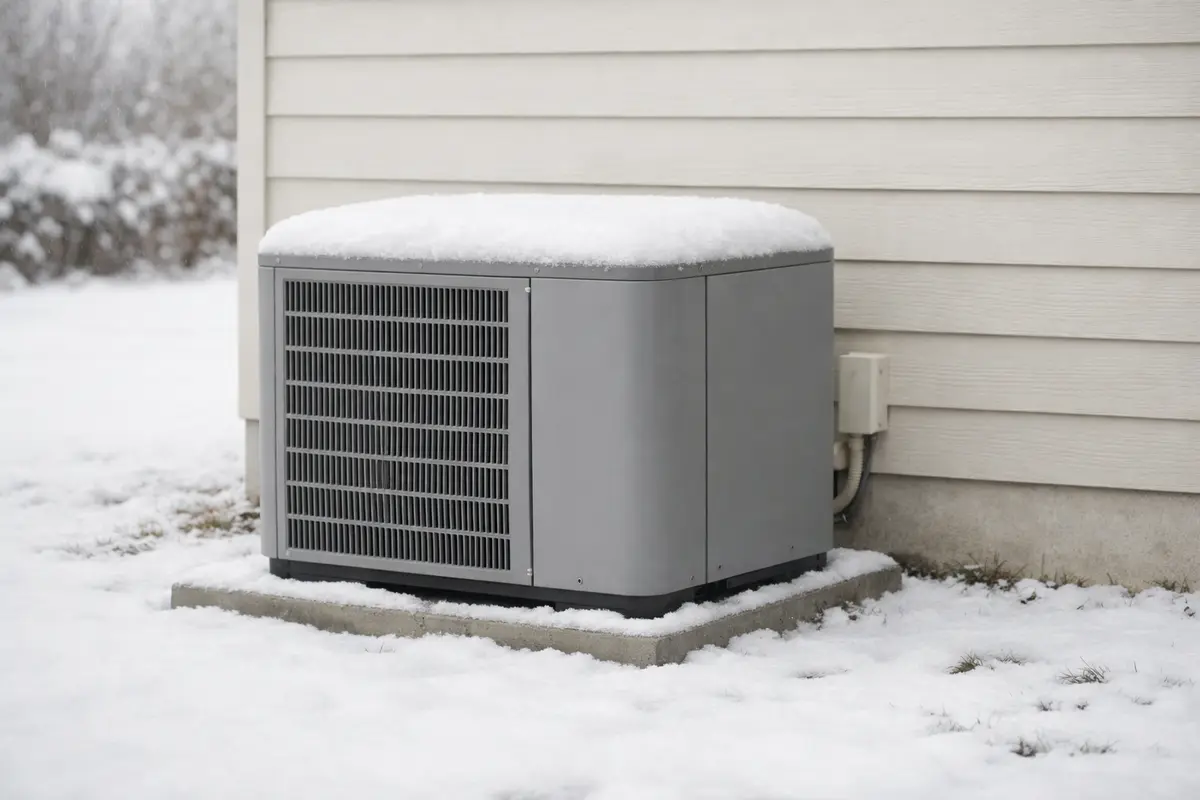
Look at the outdoor unit. Is it covered in thick ice, or is the fan not running?
A little frost that melts during a defrost cycle is normal. Do not chip at ice.
Thick ice, or ice keeps coming back
Deal with it soon
Call an HVAC technician
Ice that keeps building, or a system that cannot keep up, can mean low refrigerant. Refrigerant work is not a homeowner job.
What to do
- Keep the area around the unit clear of snow and debris, but do not chip at the ice.
- Call a licensed HVAC technician.
- Emergency heat can keep you warm in the meantime. Use it sparingly, because electric resistance heat can sharply raise your electric bill.
The fan is not running
Deal with it soon
Call a licensed HVAC technician
The manufacturer asks you to confirm the outdoor fan is running. If it is not, a technician has to diagnose why. Electrical component work is not a homeowner job.
What to do
- Do not open the unit or touch wiring.
- Call a licensed HVAC technician and say the outdoor fan is not running.
- Use emergency heat sparingly if you need warmth. It can sharply raise your electric bill.
Looks normal, but the house is still not warm
Does the system cool in summer but not heat in winter, or do you suspect leaky ducts?
It cools but does not heat
Deal with it soon
Call an HVAC technician
A system that works in cooling but not heating can point to a stuck reversing valve, which is a technician repair.
What to do
- Tell the technician it cools but does not heat.
- Do not open the unit.
- Use emergency heat sparingly while you wait.
I can feel leaks at exposed ducts
Deal with it soon
Ask a contractor to look at the ducts
Leaky ducts reduce airflow and efficiency, and hidden ductwork needs a contractor to diagnose. DOE also says ducts that leak can add hundreds of dollars a year.
What to do
- Ask for a duct leakage check and sealing.
- Meanwhile make sure vents are open and not blocked.
Neither, or I'm not sure
Deal with it soon
Call an HVAC technician
If the thermostat, power, filter and outdoor unit are fine and the house is still cold, the cause is inside the system.
What to do
- Turn the thermostat off, switch the breakers off for a minute, then back on, and set the thermostat to heat. Do this once only.
- If that does not help, call a licensed HVAC technician.
- Tell them what you checked. Some loss of heating power in very cold weather is normal, so mention the outdoor temperature.
The safety question comes first
A heat pump is electrical equipment. A burning smell, smoke, sparking or a breaker that keeps tripping is a fault that can start a fire, and Carrier lists breakers that keep tripping among the reasons to call a technician. The tool ends there with an act-now result: turn the system off, leave the breaker off, and phone a licensed professional. With smoke or flames, leave and call 911.
The checks, in the manufacturer's order
Carrier's help page lists the checks in an order the tool follows. Make sure the thermostat is set to heat, and not to cool or constant fan, since either of those blows cool air. Confirm that the outdoor disconnect and the indoor power switch are on. Clean or replace the filter, which DOE says to do monthly in peak seasons. Look at the outdoor unit: clear debris away, and confirm that the fan runs. A thin frost that melts during a defrost cycle is normal. A thick coat of ice, or ice that keeps coming back, is not.
Emergency heat and the bill
If the outdoor unit has stopped, many thermostats offer an emergency heat setting. Carrier says to use it sparingly, since electric resistance heat can raise the electric bill sharply. That is the energy link on this page: a heat pump is efficient because it moves heat, and emergency heat gives up that advantage. The Energy Saver Guide adds that a heat pump can provide up to three times more heat than the energy it consumes, which shows how much is at stake.
What goes to a technician
The manufacturer's not-DIY list includes ice that keeps building, a system that cannot keep up, a unit that cools but will not heat, any refrigerant work and any electrical component work. The tool sends all of those to a licensed HVAC technician. Leaky exposed ducts can be felt by hand, but hidden ductwork needs a contractor, and the Energy Saver Guide says leaky ducts can add hundreds of dollars a year.
Worked example
On a cold evening Mina finds the house chilly. There is no smell and the breaker is on. The thermostat was set to heat. The disconnect is on and the filter is clean, so she goes outside. The unit is running and the fan turns, with a little frost that is clearing. The tool asks whether it also fails to heat in the other direction. It cools fine in summer, so the tool asks about ducts. She cannot feel any leak, so the result is to turn the thermostat and breakers off for a minute, restart once, and call a technician if it does not help. She also learns to keep emergency heat as a stopgap, not a habit.
Renting
Report it to the landlord in writing. Use the renter's repair request letter and keep a copy.
Related
If the system will not start at all, use heat pump not turning on. For a ductless system, see mini-split not cooling, which also covers its ice and outdoor unit checks.