
Questions to ask an insulation contractor
Know your attic depth and target R-value before you call. Ask each contractor for the installed R-value in writing, the product fact sheet the FTC requires, and what air sealing is included. Get several written estimates, read the contract and do not pay in full up front.
On this page
Adding insulation is one of the upgrades the Department of Energy keeps coming back to, and most of it is done by contractors. The quotes can be hard to compare: one lists inches, another lists bags, a third quotes a price per square foot. This checklist turns DOE's guidance on where and how to insulate, and the Federal Trade Commission's rules and warnings for home improvement work, into the questions to ask before, during and after the job. Tick items off as you go, and print it to take to the walk-through.
Questions to ask an insulation contractor
Use this before, during and after the quotes. It covers what to know about your house first, what to ask each contractor, what the contract and paperwork should say and the warning signs the FTC lists.
0 of 24 done
Before you call anyone
About the contractor
About the job
DOE says loose-fill insulation settles under its own weight, so its R-value does not rise in step with thickness, and compressed insulation loses some of its rating.
Source: U.S. Department of Energy, Energy Saver: Insulation (archived June 22, 2026)
If a seller or installer will not give you R-value information, the FTC suggests buying from someone else.
Source: Federal Trade Commission, What To Know When You're Buying Home Insulation
DOE says moisture control matters alongside insulation, and radon and termites can affect foundation work.
Source: U.S. Department of Energy, Energy Saver: Insulation (archived June 22, 2026)
The estimate and the contract
Walk away if
When the job is done
Sources (5)
- U.S. Department of Energy, Energy Saver: Insulation (archived June 22, 2026) web.archive.org
- U.S. Department of Energy, Energy Saver: Where to Insulate in a Home (archived June 25, 2026) web.archive.org
- Federal Trade Commission, What To Know When You're Buying Home Insulation consumer.ftc.gov
- Federal Trade Commission, How To Avoid a Home Improvement Scam consumer.ftc.gov
- ENERGY STAR, Recommended Home Insulation R-Values energystar.gov
Know your numbers first
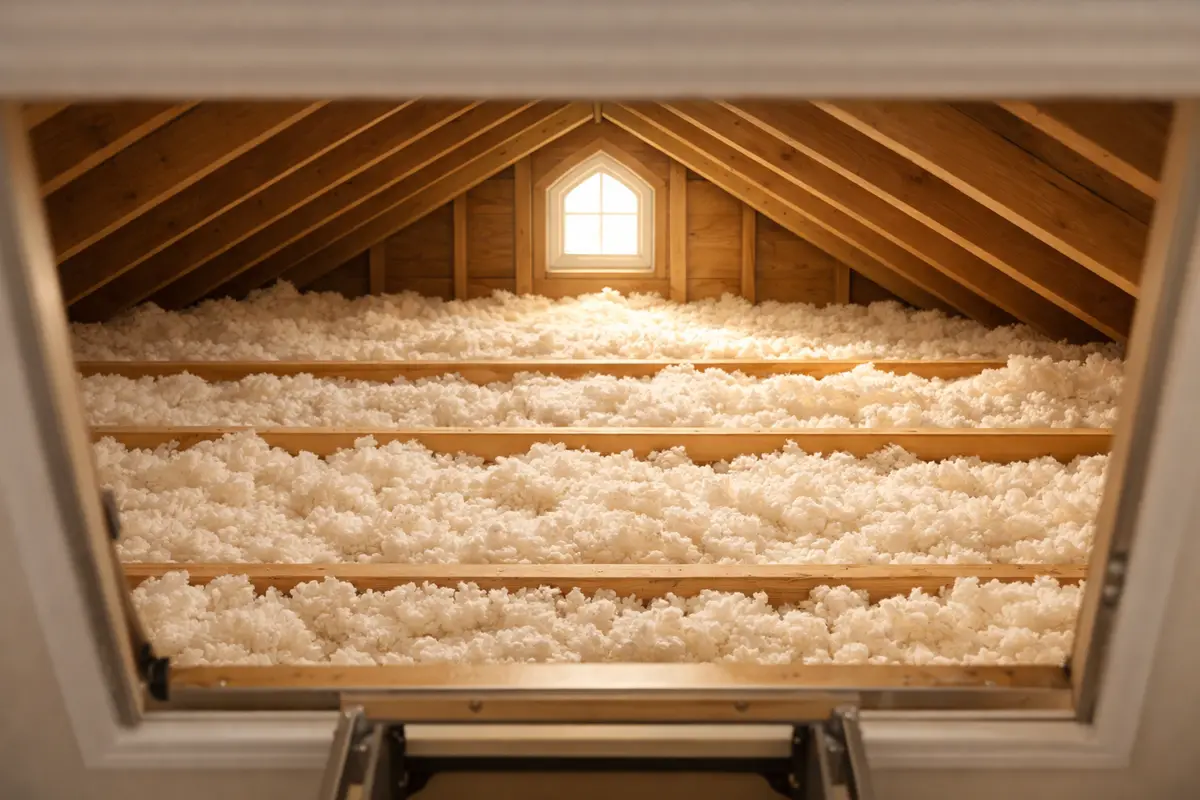
Two numbers make every quote easier to read. The first is what you have: DOE suggests measuring the depth of the attic insulation, and says that if it is less than R-30 (about 10 to 13 inches), you could probably benefit from adding more. The second is what you want: ENERGY STAR publishes recommended levels by climate zone, which our R-value lookup shows. With both in hand, you can tell at a glance whether a quote reaches the target.
Why the R-value has to be in writing
R-value is the measure of how well insulation resists heat flow, and it is what you are paying for. DOE explains that it does not track thickness neatly: loose-fill insulation settles under its own weight, so piling on more inches does not raise the R-value in proportion, and insulation that is squashed into a space delivers less than its rating. That is why the checklist asks for the installed R-value of each area, not a depth or a bag count.
The FTC backs this up. Its R-value Rule requires manufacturers to label insulation packages and requires installers and retailers to give you a fact sheet. The FTC says that if a seller or installer will not give you R-value information, consider buying from someone else.
Insulation is not the only job
DOE's advice is to seal air leaks and fix roof problems before insulating, and to remember the attic hatch, knee walls, band joists and any ducts that run through the attic. Ask whether those are in the quote. Moisture matters too: DOE says moisture control is part of doing insulation right, and radon and termites can affect what goes on foundation walls.
Protecting yourself
The FTC's guidance on hiring a home improvement contractor applies fully here. Consider only licensed and insured contractors, confirm the license with your state or county, get several written estimates and read the contract before you sign. If you sign at home, the contract should spell out your right to cancel within three business days. Do not pay everything up front. The warning signs in the last section of the checklist come from the FTC's list of tactics scammers use.
Worked example
Lena's upstairs is cold in winter. She measures the attic and finds a few inches of old batts, well short of DOE's benchmark, and looks up her zone's target in the R-value lookup. She calls three contractors and asks each the same questions from the list. Two quote the installed R-value per area and include air sealing and the hatch; the third quotes only a number of bags and wants a deposit of the full price. She drops the third, compares the other two on the same R-value, signs the one whose contract lists the license number and completion date, and checks the attic depth before making the final payment.
Related
Pair this with the air sealing checklist and the DIY home energy audit, which help you find where the house loses heat before anyone quotes.
Sources
- U.S. Department of Energy, Energy Saver: Insulation (archived June 22, 2026) web.archive.org
- U.S. Department of Energy, Energy Saver: Where to Insulate in a Home (archived June 25, 2026) web.archive.org
- Federal Trade Commission, What To Know When You're Buying Home Insulation consumer.ftc.gov
- Federal Trade Commission, How To Avoid a Home Improvement Scam consumer.ftc.gov
- ENERGY STAR, Recommended Home Insulation R-Values energystar.gov